

Balarama vs Bhima Who Was the Stronger Warrior?
Explore a detailed comparison of the legendary strength of Balarama and Bhima from the Mahabharata. Learn about Balarama's divine connection to Shesha Naga, his victories over Jarasandha, and his unmatched feats of power. Contrast this with Bhima's incredible strength and his pivotal battles, including his encounter with Jarasandha. Discover why Balarama's might surpasses Bhima's in these ancient tales.
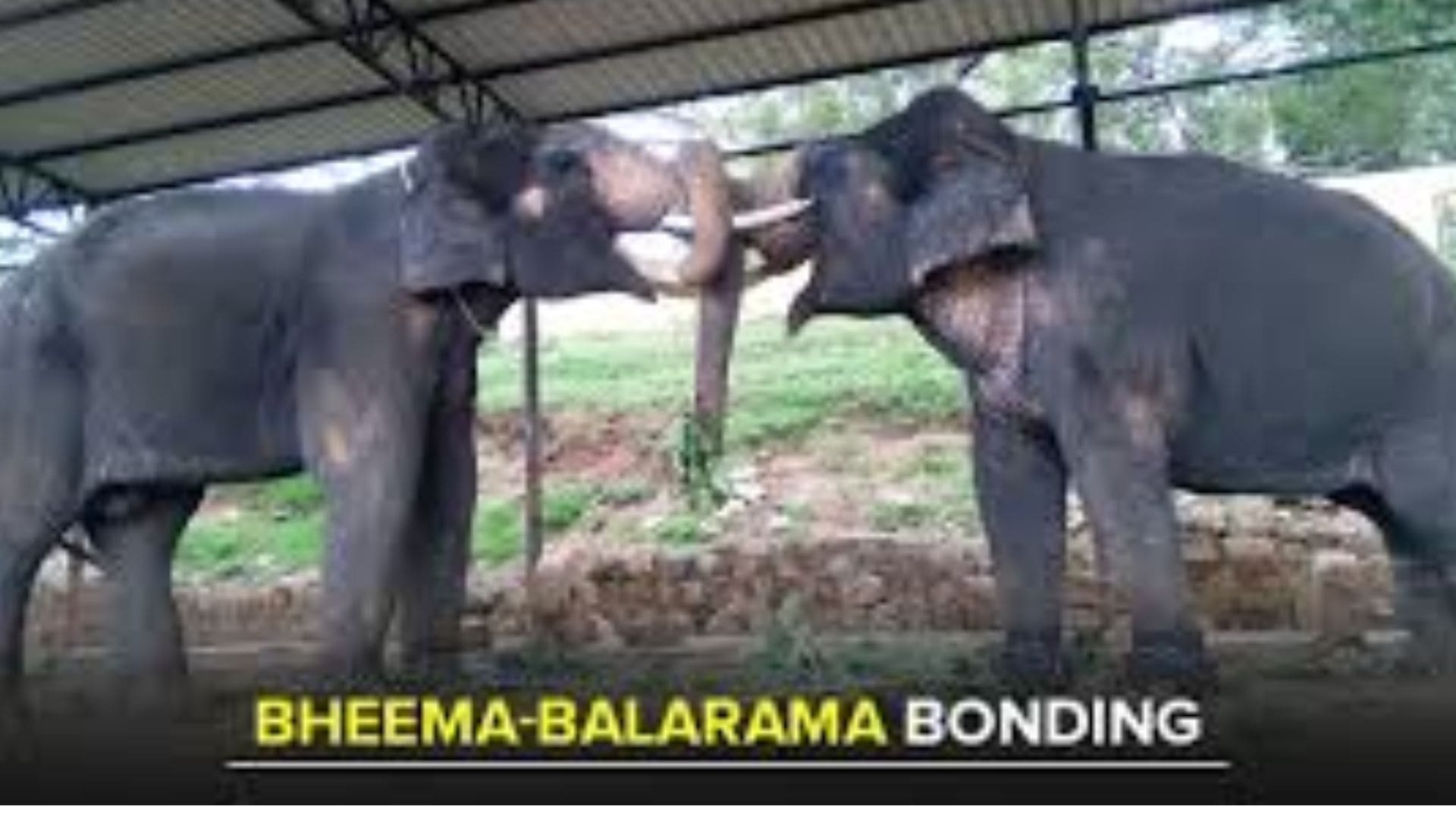
Balarama was stronger than Bhima.
Bhima was the son Vayu, the wind god. He possessed the strength of ten thousand elephants as mentioned in Mahabharata.
Mahabharata shows many instances which bear testimony to Bhima's incredible strength.
Balarama on the other hand was the incarnation of Shesha Naga, the serpent who is responsible for bearing the weight of the creation.
Authoritative texts like Harivamsa and Bhagavata Purana mention Balarama's exploits.
Balarama killed invincible demons like Pralamba and Dhenuka with just a blow of his fists. He was powerful enough to render the gigantic elephant Kuvalayapida unconscious with a mere blow of his fists.
Balarama effortlessly defeated Jarasandha seventeen times in the city of Mathura.
Bhima was unable to defeat the same Jarasandha in a wrestling bout. The battle was locked to stalemate after a long-drawn encounter of fourteen days. Finally Lord Krishna revealed to Bhima the approach for killing Jarasandha. Bhima was able to subdue Jarasandha only after the instructions of Lord Krishna.
Balarama defeated Bhima in a wrestling bout as mentioned in Harivamsa.
Bhima decided to become Balarama's disciple after the outcome of the wrestling bout.
Balarama was powerful enough to shift the course of Hastinapura towards Ganga with his plough.
Balarama was powerful enough to withstand the force of Jvara, the fever of Lord Shiva.
There can be none more powerful than Shesha Naga, the serpent who bears Lord Vishnu himself in the ocean of milk.
Shesha Naga is also known as 'Ananta' the one whose power is infinite and fathomless.
Balarama was Shesha Naga's incarnation and way more powerful than Bhima.
In the sacred tradition of Sanatana Dharma, stories are not merely historical lore — they are living mirrors of consciousness. Contemplate how the virtues portrayed in this narrative can guide your decisions today.
Experience the Tapas Mobile App
Listen to audio recitations, explore Vedic podcasts, and get personalized daily horoscope & pooja remedies.
Similar Sacred Stories
The Divine Tale of Pradyumna: Incarnation of Kamadeva and Slayer of Shambara
Discover the legendary story of Pradyumna, the son of Shri Krishna and Rukmini, and the reincarnation of Kamadeva. Follow his miraculous journey from being abducted by the demon Shambara, to his heroic victory using the mystical powers of Mayavidya. Learn how destiny, love, and divine purpose unite as Pradyumna returns to Dwarka to fulfill his role in the grand cosmic plan.

The Life of Bhishma: A Saga of Sacrifice, Valor, and Dharma
Explore the incredible life of Bhishma, one of the greatest warriors and noblest souls of the Mahabharata. Born as Devavrata, Bhishma’s unwavering dedication to dharma, loyalty to his family, and unmatched prowess in warfare made him a legendary figure. From his selfless vows for the throne of Hastinapura to his mentorship of the Pandavas and Kauravas, and his heroic yet tragic role in the Kurukshetra war, this tale reflects a life filled with sacrifice, sorrow, and enduring wisdom. Discover how his legacy continues to inspire generations with lessons on duty, righteousness, and resilience
Comparing Lakshman, Arjuna, and Karna: A Mythological Perspective on Strength and Divinity
Explore an intriguing comparison of Lakshman, Arjuna, and Karna through the lens of Indian mythology. Delve into Lakshman’s divine connection as Sheshnaag's incarnation, Balaram’s role in Dvapara Yuga, and how their divine power compares to the legendary mortal warriors, Arjuna and Karna. A fictional inference based on epic tales that highlights the interplay of divinity, strength, and human limitations.