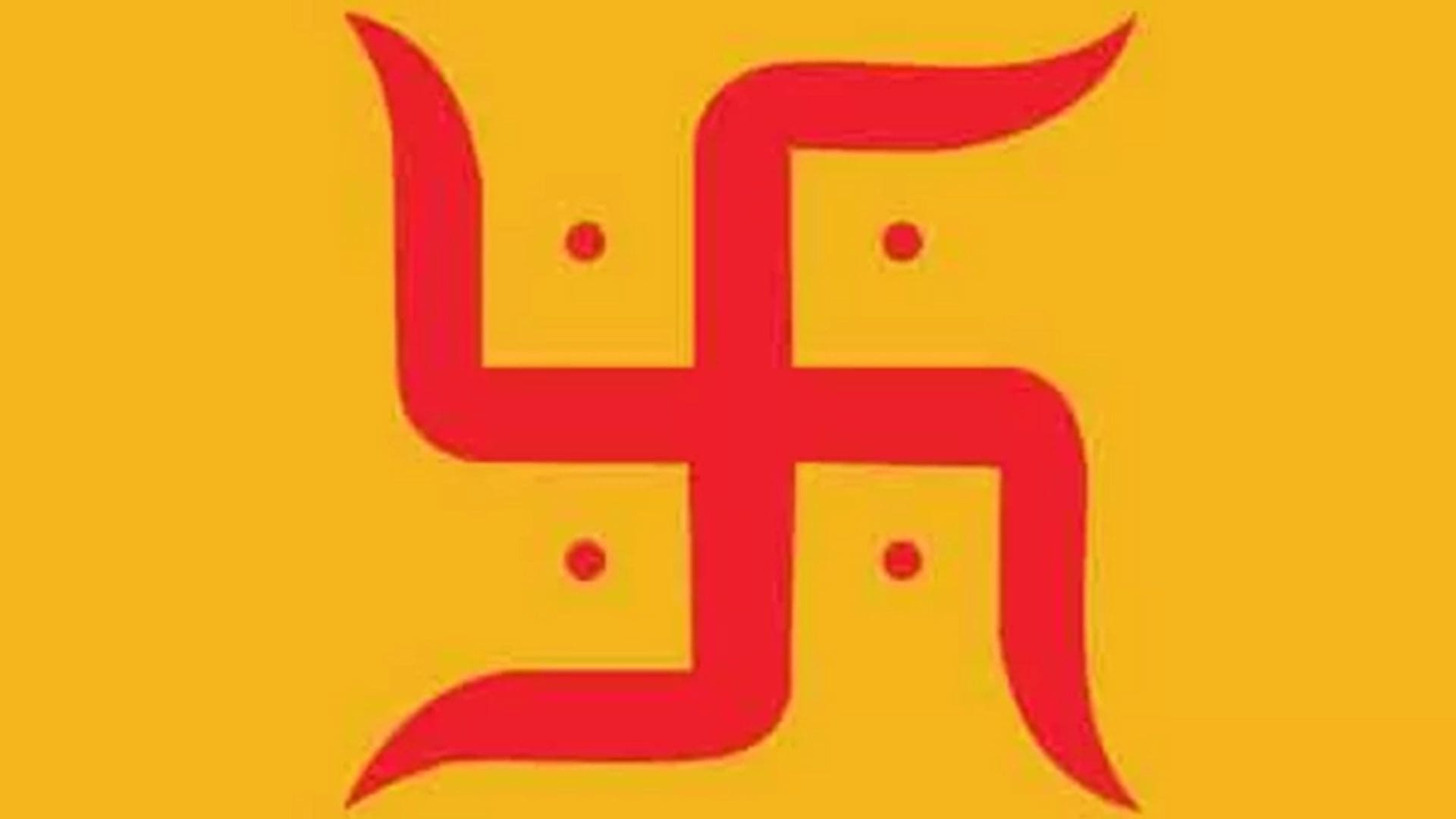
The Swastika: A Symbol of Good Luck, Peace, and Cultural Significance in Hinduism
The swastika is a symbol of good luck, well-being, and peace in Hinduism and other religions:
Meaning The swastika is a cross with four right-angled arms that extend clockwise or counter-clockwise. The word "swastika" comes from Sanskrit and is a combination of "su" (meaning "good") and "asti" (meaning "to exist"). Importance In Hinduism, the swastika is an important symbol that represents: The essence of life on earth The essence of Indian culture and civilization The protective power of God The auspicious Kali, or the fierce form of the mother goddess Vedic defensive power Good fortune and positive energy Use The swastika is often used in Hindu rites and festivities. It's also commonly displayed on Hindu homes, businesses, printed materials, cars, temples, and ashrams. Origin The swastika likely originated in the Neolithic Period as early as 10,000 BCE. It took on religious symbolism in the Indus Valley Civilization around 2500 BCE. The swastika has also been used by the Nazis and is a controversial cultural icon. In Germany and other European states, it's illegal to publicly display Nazi symbols, including the swastika
Similar Stories
Delve into the Hindu worldview of life and death as an eternal cycle governed by *samsara* (reincarnation) and *karma*. Understand the soul's journey beyond the physical body, the spiritual role of grief, and the importance of *dharma*—a moral code that harmonizes life with cosmic order. Discover the profound path toward liberation (*moksha*).
Discover the grandeur of Mahakumbh 2025 in Prayagraj, a once-in-144-years spiritual event. Join over 450 million devotees for sacred Shahi Snans, celestial alignments, and spiritual festivities at the Sangam. Explore modern AI-driven facilities, enhanced infrastructure, and timeless tradition
Explore the significance of Dattatreya, the combined form of Brahma, Vishnu, and Shiva. Revered as the Adi-Guru, he embodies creation, preservation, and transformation, holding supreme wisdom and guiding spiritual seekers across Shaivism, Vaishnavism, and Shaktism.
Astrology, Mantras, Events, Stories & More.